Planning bariatric surgery in Mexico involves more than comparing package prices. A useful plan connects clinical assessment, a named surgeon and hospital, travel arrangements, and continuing care after you return home. An advertised price or a completed application does not establish that surgery is appropriate for you.
For patients considering Dr. Héctor Pérez through Renew Bariatrics, the first step is a coordinator-led conversation and a review of the information needed by the clinical team. This guide explains what to confirm before making a commitment, how to compare written quotes, and why the return-home plan deserves the same attention as the operation.
Start with the clinical question
People travel for different reasons: affordability, access, timing, or a preference for a particular physician. Those practical considerations matter, but the treatment decision still needs to fit the person. The NIDDK overview of potential candidates explains that a surgical evaluation considers health and readiness for continuing changes, rather than a single measurement alone.
If you have had a previous operation, describe it at the beginning. A patient with reflux after a sleeve has a different question from someone considering a first operation. Previous anatomy, symptoms, nutritional status, and available records can affect the assessment. Our revision evaluation guide explains how to organize that information.
Ask what stage you have reached: an inquiry, collection of health information, preliminary assessment, or a confirmed treatment plan. If a recommendation depends on laboratory results or additional testing, record those conditions. Avoid treating a travel discussion or an available date as confirmation that clinical assessment is complete.
Verify the people and the place
A country name is not a quality standard. Hospitals, surgeons, services, and arrangements differ within Mexico just as they differ within other countries. Claims that every hospital has identical standards, or that all training pathways are equivalent, are too broad to help you assess a specific plan.
The CDC’s medical-tourism guidance recommends investigating clinicians and facilities and planning for possible complications. Ask for the surgeon’s full name, the proposed hospital, and the way you can verify relevant professional records. Review the actual documentation rather than relying only on badges or a promotional description.
Dr. Pérez’s biography and professional work provide starting points. The care-locations page explains why the assigned facility should be confirmed for the particular procedure and date. A coordination office address is not necessarily the address where surgery occurs.
Also ask who provides anesthesia, how unexpected findings are handled, and how the team arranges a higher level of care when necessary. These are practical questions about the proposed setting. A hotel or recovery facility should not be described as interchangeable with a hospital merely because a package includes accommodation.
Compare written quotes using the same categories
Published prices can change and may describe a starting package rather than the cost of an individual treatment plan. This article does not promise a fixed price. Use Renew’s current cost information as a starting point, then request a written quote tied to your proposed procedure, surgeon, location, and dates.
| Category | What to confirm in writing |
|---|---|
| Clinical services | Surgeon and anesthesia fees, planned hospital stay, testing, and which prescriptions are included. |
| Travel and accommodation | Ground transport routes, hotel nights, companion arrangements, and whether flights are excluded. |
| Changes to the plan | Costs if testing changes the recommendation, surgery is postponed, or an additional stay is needed. |
| Continuing care | Follow-up contacts, laboratory testing, local visits, nutrition support, and any separate charges. |
| Complications | Who coordinates assessment and how additional treatment, transfer, or readmission would be paid for. |
The phrase all-inclusive needs a defined list of inclusions and exclusions. Ask how the quote treats an unexpected procedure, an additional hospital night, companion meals, or transportation outside the standard route. A clear answer is more useful than assuming that every possible expense is included.
Compare the total practical cost, not only the operation. Time away from work, childcare, flexible tickets, supplements, and follow-up can affect affordability. If you use financing, read the lender’s terms separately from the surgery quote. The availability of financing does not change clinical eligibility.
Build travel around the clinical plan
Confirm arrival instructions, the expected local stay, transport arrangements, and the conditions for departure before buying tickets. The itinerary should allow for assessment and recovery; it should not force a clinical decision to fit a nonrefundable flight. Ask what happens if departure needs to be delayed.
The CDC notes that travel and recent surgery can create additional concerns, including blood-clot risk. The appropriate travel timing and precautions require individual advice. Do not substitute a general itinerary from another patient for the treating team’s instructions about your operation and health history.
Give the coordinator accurate information about the departure airport, mobility needs, companion, and any assistance you may require. Keep a written copy of the pickup instructions and the number to call if a flight changes. An itinerary is easier to follow when the responsible person for each transfer is clear.
If you plan to recover with a companion, confirm what that person can realistically do and where they will stay. A companion can help with practical tasks, but should not be expected to replace professional assessment or nursing care. Ask about arrangements if you need more support than anticipated.
Arrange follow-up before leaving home
Weight-loss surgery requires continuing attention to nutrition, symptoms, and health conditions. The NIDDK procedure overview explains that operations differ and that ongoing habits and follow-up remain important. A short hospital stay does not mean that treatment ends at discharge.
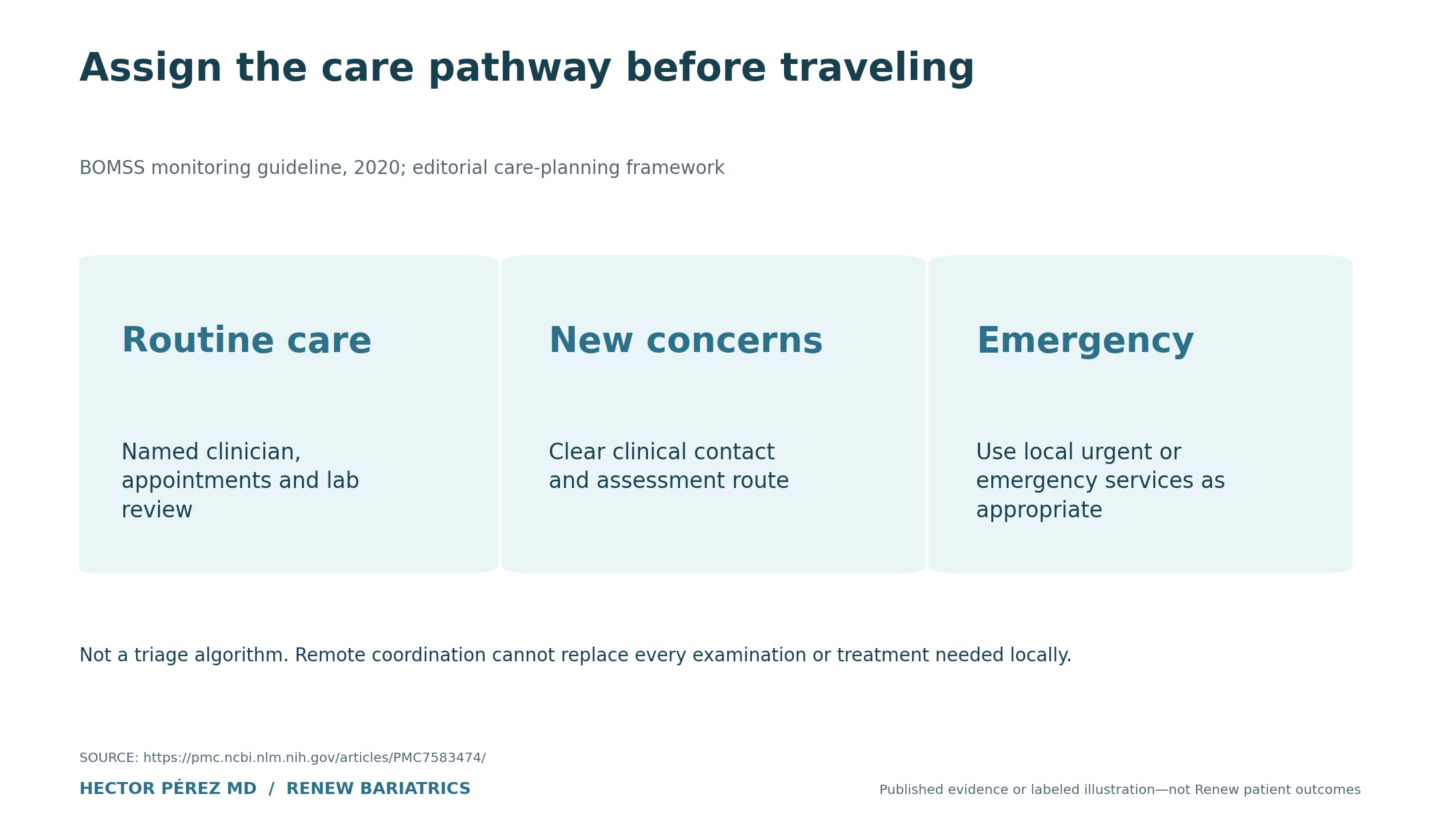
Identify the clinician or service available near home for examinations and tests. Ask how records will be transferred, who will review results, and how the overseas team and local clinician can communicate. Remote contact can support continuity, but cannot provide every examination or treatment that may become necessary.
Before discharge, obtain the operation summary, medication instructions, diet progression, follow-up schedule, and contact details. Know where you would seek urgent assessment locally. If there is a language difference, request records or a summary that your home clinician can use.
Keep medication decisions with the appropriate clinician. Tell the team about prescription medicines, over-the-counter products, and supplements before travel, and obtain individualized instructions. This page intentionally provides no universal stop-and-start schedule because those decisions depend on the medicine, procedure, and patient.
Use patient experiences for the questions they answer
Reviews naming Dr. Pérez can help you understand what patients describe about communication, coordination, and their experience of care. The photograph gallery provides selected reported results. Neither collection is a complete record of outcomes or a guarantee about another patient’s experience.
Look for the procedure, time since treatment, and source of each account. A sleeve testimonial cannot establish the likely result of TORe, ESG, or a complex revision. Ask for information relevant to your own situation instead of treating a compelling photograph as a treatment recommendation.
Research graphics on this website describe the studies cited beside them. They should not be interpreted as Dr. Pérez’s personal results unless explicitly supported by practice-specific records. The distinction helps you separate published evidence, professional experience, and individual stories.
Questions to settle before making a commitment
Write a short list of unresolved items: the exact operation, why it is being proposed, which alternatives were considered, what assessment remains, and what happens if the recommendation changes. Ask for answers in a form you can refer back to rather than relying on memory from a call.
Confirm the deposit, cancellation, and rescheduling terms before paying. Check which deadlines apply to your booking and whether travel expenses have separate rules. Do not assume that a statement made about another patient’s package also applies to yours.
If an explanation remains unclear, ask the coordinator to route the question to the appropriate clinician or administrative team. The goal is a plan you understand well enough to compare, not a quick decision made under pressure. It is reasonable to pause while essential information is missing.
Begin an inquiry with Renew
Use the Contact page for a coordinator conversation or See If I Qualify to provide your health history. Mention Dr. Pérez if you want him considered and describe any previous bariatric procedure. The team can explain the next assessment step, current program details, and how to obtain a personalized quote.
Keep one shared care summary
Bring a concise summary that includes the dates and names of previous operations, current medicines, allergies, relevant diagnoses, and the contact details of clinicians involved at home. Include the reason you are seeking treatment now. This helps separate important clinical facts from practical travel messages.
Update the summary when something changes during the booking process. A new medicine, recent hospitalization, or new symptom may affect the assessment even if you already submitted an application. Tell the team rather than assuming that a previous review still covers the new information.
After treatment, add the actual operation performed and the discharge plan. Keep the original reports as well as your summary; a short personal note cannot replace the full operative record. Ask how to obtain another copy if an electronic link stops working. A usable record is particularly valuable when care is shared between teams in different countries.