Gastric sleeve surgery, or sleeve gastrectomy, removes a large portion of the stomach to create a narrower stomach while keeping the intestinal route intact. It can support substantial weight loss and improvement in obesity-related health problems. It is permanent, and it requires ongoing nutrition care and medical follow-up.
For patients considering Dr. Hector Perez through Renew Bariatrics, the decision should begin with clinical suitability. Price, travel convenience and a preferred procedure are useful planning considerations, but they do not determine whether sleeve is the right operation. Significant reflux, prior stomach surgery and other health conditions can change the discussion.
What the operation changes
The sleeve reduces stomach capacity and changes signals involved in appetite. The removed stomach is not put back later. Unlike Roux-en-Y bypass, sleeve does not create a new route around part of the small intestine. These differences affect both the benefits and tradeoffs. The NIDDK procedure guide explains the anatomy of each operation.
Sleeve is also different from endoscopic sleeve gastroplasty (ESG). ESG uses endoscopic suturing and does not remove stomach tissue. Similar names do not make the procedures equivalent in technique, evidence, recovery or expected weight response.
What long-term research shows
In the SleeveBypass randomized trial, 628 adults were assigned to sleeve or Roux-en-Y bypass. At five years, average total weight loss was 22.5% after sleeve and 26.0% after bypass. New reflux was reported more often after sleeve, while minor complications were more frequent after bypass; major complications did not differ significantly. The trial supports considering several outcomes together. Read the trial report.
Total weight loss is the percentage of starting body weight lost. For example, a 20% reduction from 250 pounds equals 50 pounds. That arithmetic explains the measure; it is not a prediction of your result. Excess weight loss is a different measure and should not be substituted when comparing studies or advertisements.
Published trial results describe groups treated in those studies. They are not Dr. Perez’s personal outcomes, and an individual may lose more or less. Ask how a program measures results, how long it follows patients and whether it includes those who stop attending appointments.
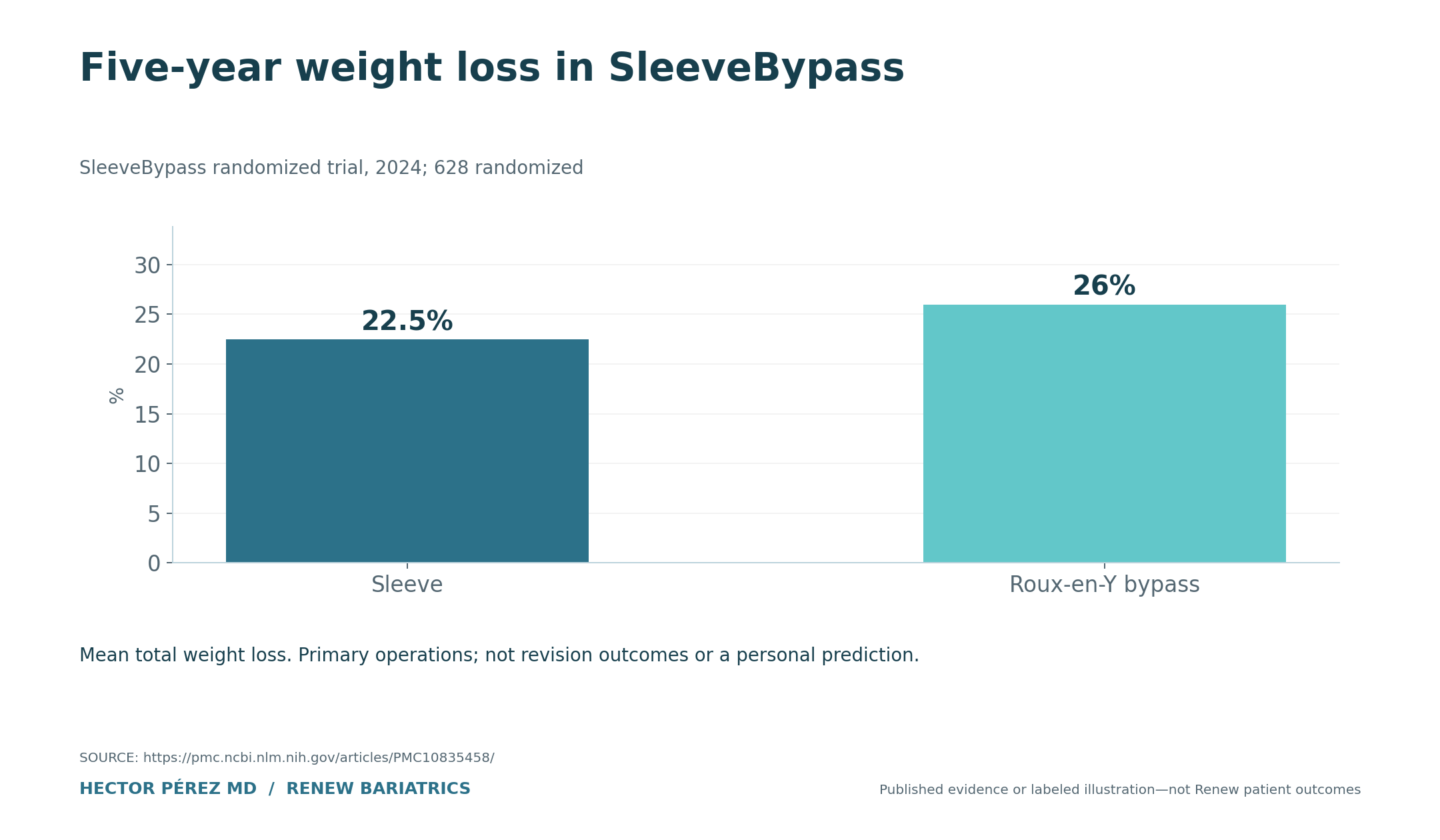
Figure data and interpretation
| Measure or group | Reported value or context |
|---|---|
| Sleeve | 22.5% |
| Roux-en-Y bypass | 26.0% |
Mean total weight loss. Primary operations; not revision outcomes or a personal prediction.
Reflux deserves attention before sleeve
Tell the team about heartburn, regurgitation, nighttime cough, trouble swallowing and any prior endoscopy. The symptoms, test findings and treatment history help determine whether sleeve is reasonable or whether another option deserves more attention.
In the ten-year SLEEVEPASS randomized follow-up, esophagitis was found in 31% of endoscopically assessed sleeve patients and 7% of bypass patients. That difference concerns inflammation seen at endoscopy, not a claim that everyone with a sleeve develops symptoms. See the ten-year study.
If you already have a sleeve and are researching this page because of reflux, start with reflux after sleeve. A first-time surgery page cannot answer the different questions raised by an existing operation.
Who may be considered?
Current ASMBS/IFSO guidance recommends metabolic and bariatric surgery for BMI of 35 or higher regardless of accompanying conditions, and supports consideration in selected people with BMI 30–34.9 when metabolic disease or inadequate durable response to nonsurgical treatment is relevant. These recommendations are a framework for assessment, not automatic approval for sleeve.
A complete review considers your health, prior treatment, medications, surgical history and readiness for follow-up. A BMI calculator cannot assess reflux, nutritional status or anesthetic risk. If another operation or a nonsurgical treatment fits better, the recommendation should explain why.
Risks and the commitment after surgery
Potential complications include bleeding, leakage, infection, blood clots, narrowing and problems related to anesthesia. Later concerns can include reflux, nutritional deficiencies or weight recurrence. An individualized risk discussion should identify which concerns are most relevant to you and how the team responds if they occur.
After surgery, food texture progresses according to the clinical plan. Hydration, protein intake, supplements and follow-up remain important after the first weeks. The ASMBS patient guide emphasizes lifelong vitamin and mineral supplementation and continuing care. Follow your team’s written instructions rather than another patient’s schedule.
Discuss how laboratory monitoring and obesity care will continue near home. Ask who reviews the results, how medication adjustments are handled and what happens if symptoms develop between appointments. An operation changes anatomy; it does not remove the need for health care.
Planning surgery in Mexico
Request the treating hospital, named clinical team, planned follow-up, itemized inclusions and arrangements for unexpected care. Ask when it is medically appropriate to travel after treatment and what happens if your stay needs to be extended. Confirm these details for your own plan rather than inferring them from a starting package price.
For current program details, see Renew’s gastric sleeve service. A coordinator can explain record submission for clinical review and provide current logistical information.
Frequently asked questions
Can sleeve be reversed?
The removed portion of the stomach cannot be restored. A later conversion to another operation is a different procedure, with its own indications and risks.
Is sleeve always safer than bypass?
There is no single answer that captures every outcome. Early complications, reflux, long-term nutrition and the likelihood of another procedure all matter. Compare gastric bypass using the same questions.
What if I regain weight later?
Seek reassessment of health, appetite, nutrition and anatomy. Options may include medical treatment or, for selected patients, revisional treatment. Weight recurrence does not automatically mean that another operation is needed.
A published sleeve experience with Dr. Pérez
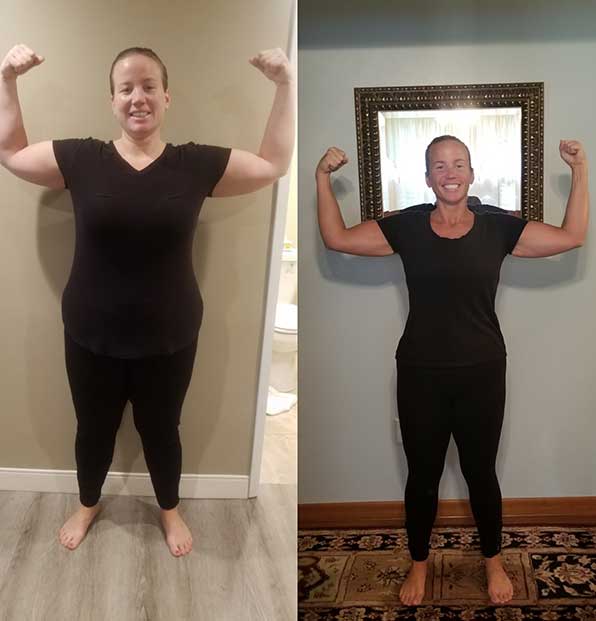
Renew’s story identifies Jessica’s operation as a gastric sleeve in February 2018 and reports a change from 226 to 161 lb. This is an individual reported experience, not a prediction. The original narrative discusses almost eight months after surgery; the exact photo dates are not stated.
View the attributed patient gallery and reviews naming Dr. Pérez.
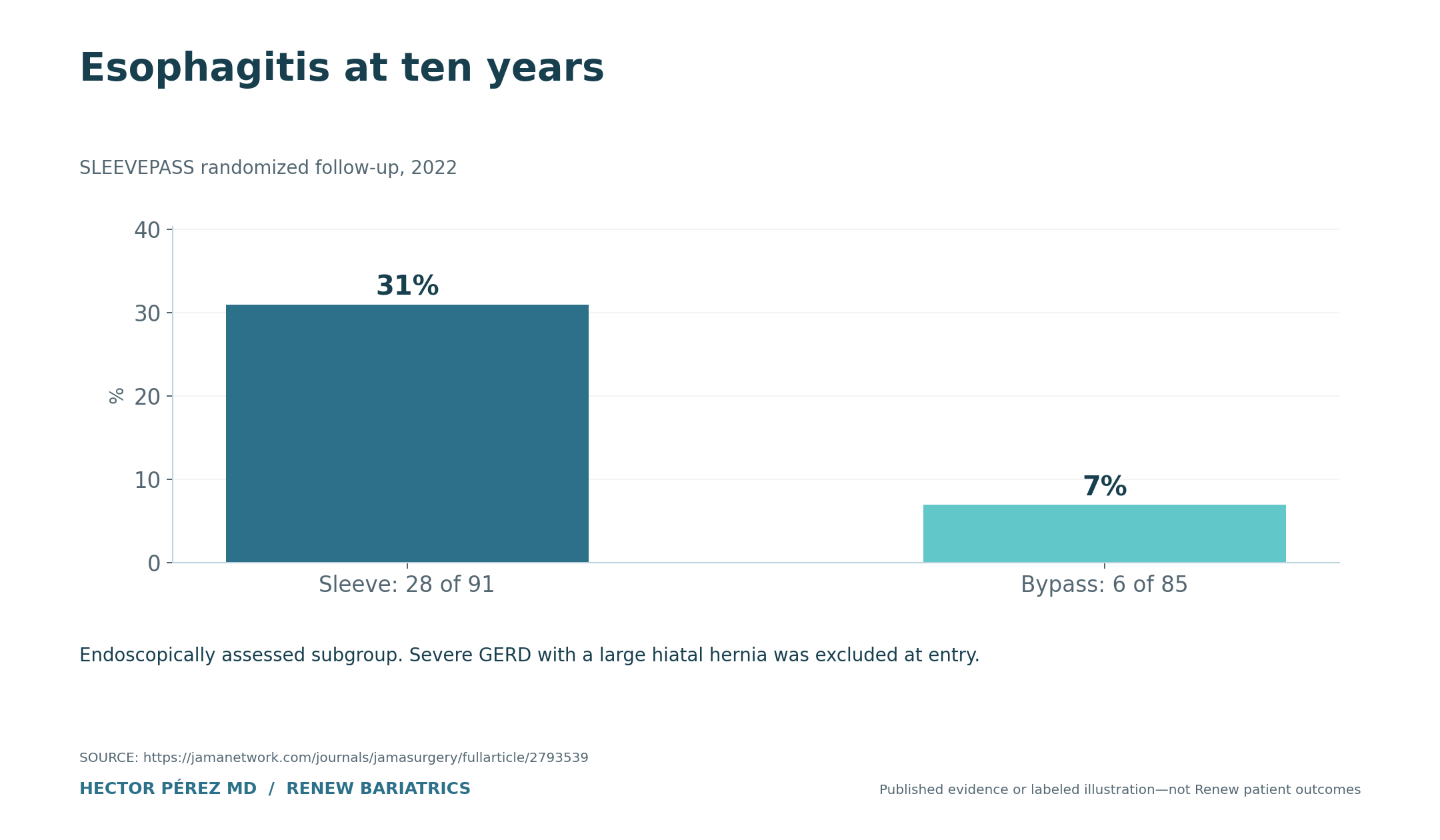
Figure data and interpretation
| Measure or group | Reported value or context |
|---|---|
| Sleeve: 28 of 91 | 31% |
| Bypass: 6 of 85 | 7% |
Endoscopically assessed subgroup. Severe GERD with a large hiatal hernia was excluded at entry.
A procedure choice should begin with the health objective
Explain what you want treatment to improve: mobility, diabetes management, sleep-related symptoms, daily function, or another concern. Weight is an important measure, but it should connect with the reason you are considering surgery. Ask how sleeve is expected to address that objective and what other approaches remain reasonable.
The recommendation should also consider your previous treatment. Describe nutrition programs and medicines tried, the response, adverse effects, and reasons treatment ended. A medicine stopped because it became unavailable is not the same history as one that produced no useful benefit.
If the clinician recommends a different procedure, ask which finding drives that recommendation. Reflux, existing anatomy, metabolic health, and continuing care needs can change the balance. The goal is an operation suited to the assessment, not simply approval for the procedure you first researched.
What a five-year randomized comparison contributes
Randomization in SleeveBypass makes the comparison more informative than two unrelated clinic averages. Both treatments were studied within one research framework. That helps assess differences while keeping the outcomes tied to the enrolled population and follow-up period.
The weight-loss chart should still not be treated as a personal forecast. A group average contains different individual responses, and the study does not compare primary sleeve with every medication or endoscopic option available today. Ask which parts of the evidence are relevant to your circumstances.
The trial also reports outcomes beyond weight. This matters because choosing an operation involves several tradeoffs. A procedure with a favorable result on one measure may have disadvantages on another, so a single percentage cannot settle the decision.
Why the reflux chart needs its own explanation
Esophagitis is inflammation assessed at endoscopy. It is not identical to a symptom report, medication use, or the need for conversion. The ten-year SLEEVEPASS figure shows the endoscopically assessed subgroups, with their denominators visible.
The original trial excluded some patients with severe reflux and a large hiatal hernia. Its findings therefore should not be presented as a complete guide to people already seeking surgery for difficult reflux. Your existing symptoms and test findings need individual interpretation.
Ask how reflux would be evaluated before sleeve and how new or persistent symptoms would be managed afterward. A plan should address both symptom treatment and any recommended follow-up of objective findings. Do not assume that having little heartburn answers every question about the esophagus.
Sleeve and ESG share a word, not an identical treatment
In surgical sleeve, stomach tissue is removed. In ESG, an endoscope is used to place sutures and reshape the stomach without that resection. The evidence, expected response, and recovery considerations differ. A comparison should state the exact intervention rather than relying on the common word “sleeve.”
If you are attracted to ESG because it avoids abdominal incisions, discuss how that benefit fits your health goals. If sleeve is recommended for a greater expected response, ask how the clinician weighs that against its permanence and other consequences. The comparison guide provides a structured starting point.
Neither option should be selected solely by a social-media result or a price difference. The clinical assessment should come first, with logistics and cost considered as part of implementing an appropriate plan.
Preparation should account for medicines and nutrition
Provide a complete medication and supplement list, including injections, blood thinners, nicotine products, and cannabis. Ask which clinician will issue the final instructions and how conflicting advice will be reconciled. Do not independently stop prescribed treatment to simplify preparation.
If you use a GLP-1 medicine, report the dose, recent dose changes, last administration, and any digestive symptoms. The medication preparation guide explains why individualized anesthesia planning is needed. A generic rule from an older handout may not resolve your circumstances.
Discuss any known deficiency, poor intake, or difficulty tolerating supplements before starting a restrictive preoperative diet. The diet plan, any liquid-only period, and final fasting instructions are separate instructions that should be clear in writing.
Ask what early recovery will require from you
Request the food progression, hydration instructions, medicines, activity limits, and contact routes. Ask what to do if symptoms make the prescribed intake difficult. Persistent vomiting or inability to drink should not be treated as a routine inconvenience to manage alone.
Describe your work and household tasks before scheduling. Lifting a child, carrying luggage, or commuting for hours may matter as much as gym exercise. The team should translate restrictions into a practical plan for the activities you actually perform.
Confirm whether an adult escort or supervision is required after anesthesia and during discharge. A companion can help with tasks, but clinical assessment remains the responsibility of qualified professionals. Know where to seek help if symptoms arise outside routine contact hours.
Travel arrangements should follow medical readiness
Ask when the treating clinician considers travel appropriate and what findings would delay departure. A package’s hotel stay does not itself establish clearance to fly. The travel guide addresses the difference and the public-health guidance relevant to abdominal surgery.
Describe the entire journey, including transfers, border crossing, connections, and the drive home. Arrange help with luggage and consider what happens if a flight is delayed. Keep medicines, discharge records, and clinical contact information accessible.
Before booking, understand the costs and arrangements for a longer stay if needed. Flexibility should be part of the plan so a fixed ticket does not become pressure to leave before the team considers it appropriate.
Long-term care is not limited to the first weight-loss period
Ask who will review nutrition, symptoms, weight response, and associated health conditions after you return home. Lifelong follow-up should have practical arrangements for appointments, laboratory testing, and treatment of any deficiencies. A normal early recovery does not remove those needs.
Weight recurrence can occur after an initially useful response. If it happens, reassessment should consider health, treatment access, appetite, nutrition, and anatomy. It does not automatically mean the sleeve must be made smaller or converted.
Keep the operative report and follow-up records. They will be useful if a later clinician evaluates reflux, food intolerance, or weight change. Clear documentation supports care even when the original surgery was performed in another country.
Read patient experiences with the right context
The patient story on this page is an attributed individual experience. Its reported weight change is not an average for all patients and cannot predict your response. The timing of a narrative and the dates of photographs should also be distinguished when the latter are not known.
Reviews can help you identify questions about communication, hospital experience, and follow-up. They do not replace a procedure-specific outcome series with defined denominators and adverse-event reporting. Ask the program to distinguish published research, verified practice data, and individual testimonials.
When requesting review through Renew, bring your health goals, reflux history, medicines, and prior treatments. Those facts make the conversation more useful than asking only whether you meet a BMI threshold or whether a date is available. ## Additional questions before choosing sleeve
What should I ask if I rarely have heartburn but have an abnormal report?
Ask the clinician to explain the finding and whether it changes procedure selection or follow-up. Symptoms and endoscopic findings are different measures, so one should not be used to dismiss the other. Bring the complete report, including pathology if available, and explain any treatment you have received since the test. The next step depends on what was found and the rest of your assessment, not on whether an online description sounds similar to your experience.
How should I compare a successful patient story with a trial average?
Treat the story as one person’s reported experience and the trial as a group result collected under a defined method. Neither predicts your outcome. Ask about the story’s procedure and timing, then ask whether the trial population resembles your health profile. If a program has its own outcome data, request the number treated, follow-up completeness, and definition of the result. Those details make a claim more useful than a collection of favorable photographs alone.
What if I want to avoid the possibility of revision later?
No responsible procedure choice can guarantee that another intervention will never be needed. Ask which known tradeoffs are most relevant to you and how the program manages problems if they develop. Choosing carefully now includes attention to reflux, nutrition, medical conditions, and the ability to maintain follow-up. It also means understanding that obesity treatment can evolve over time. A later medication or procedure, when clinically indicated, is part of care rather than proof that you made a morally wrong decision initially.
Can I decide before the clinical review is complete?
You can express a preference, but keep the final decision open until the findings and alternatives have been explained. Ask which unanswered question is most likely to change the recommendation. Resolving that question is a more useful next step than making travel commitments around an unconfirmed procedure.
Sources and further reading
- Types of weight-loss surgery.
- SleeveBypass: five-year randomized comparison of sleeve gastrectomy and Roux-en-Y gastric bypass (2024).
- SLEEVEPASS: weight loss, comorbidities and reflux at ten years (2022).
- ASMBS/IFSO indications for metabolic and bariatric surgery (2022).
- Life after bariatric surgery (2021).
Care, in patients’ words
Patient experiences relevant to this guide
Ashley M.
Gastric sleeve
Recalls clear answers and an attentive hospital team.
Amber G.
Gastric sleeve
Felt informed and comfortable throughout her treatment.
Jaci F.
Gastric sleeve
Appreciated continued contact and guidance after surgery.
Selected patient accounts published by Renew Bariatrics. Procedures are labeled for each account; individual experiences and results vary.