Roux-en-Y gastric bypass is an operation that creates a small stomach pouch and changes the route food takes through part of the small intestine. It can produce substantial, sustained weight loss and improve obesity-related disease. Its benefits must be considered alongside surgical risks and a lifelong commitment to nutritional monitoring.
Bypass can be a first bariatric operation or, in selected circumstances, a conversion from another procedure. Those are different clinical situations. If you already have a bypass and are concerned about regain, start with the bypass weight-recurrence guide rather than using first-time surgery results to estimate revision outcomes.
How Roux-en-Y changes digestion
The pouch receives food, which then enters a segment of small intestine. Food bypasses the larger remaining stomach and the first part of the intestine. Digestive juices join the food farther along. The operation affects fullness, metabolic signaling and nutrient absorption. The NIDDK surgery guide explains this arrangement.
It is different from one-anastomosis or “mini” bypass. If a quote or consent form says only gastric bypass, ask which procedure is intended. Understanding the name and anatomy helps you compare evidence and explain your history to other clinicians later.
What do long-term results mean?
The SM-BOSS randomized trial originally enrolled 217 patients. Complete ten-year follow-up was available for 65.4%. In the intention-to-treat analysis of those assessed, total weight loss averaged 27.5% after bypass and 26.3% after sleeve; that difference was not statistically significant. Outcomes and conclusions varied with the analysis used, and the incomplete follow-up matters. Read the trial and Table 1.
A separate five-year randomized trial, SleeveBypass, found greater average total weight loss after bypass than sleeve. These studies should be read together rather than selecting the single number that makes an operation look best. Trial populations, follow-up time and how later conversions are handled can affect comparisons.
Total weight loss refers to the percentage of starting body weight lost. It is not the same as excess weight loss. A study average is useful for discussing likely ranges and tradeoffs; it is not a personal promise or a report of Dr. Perez’s outcomes.
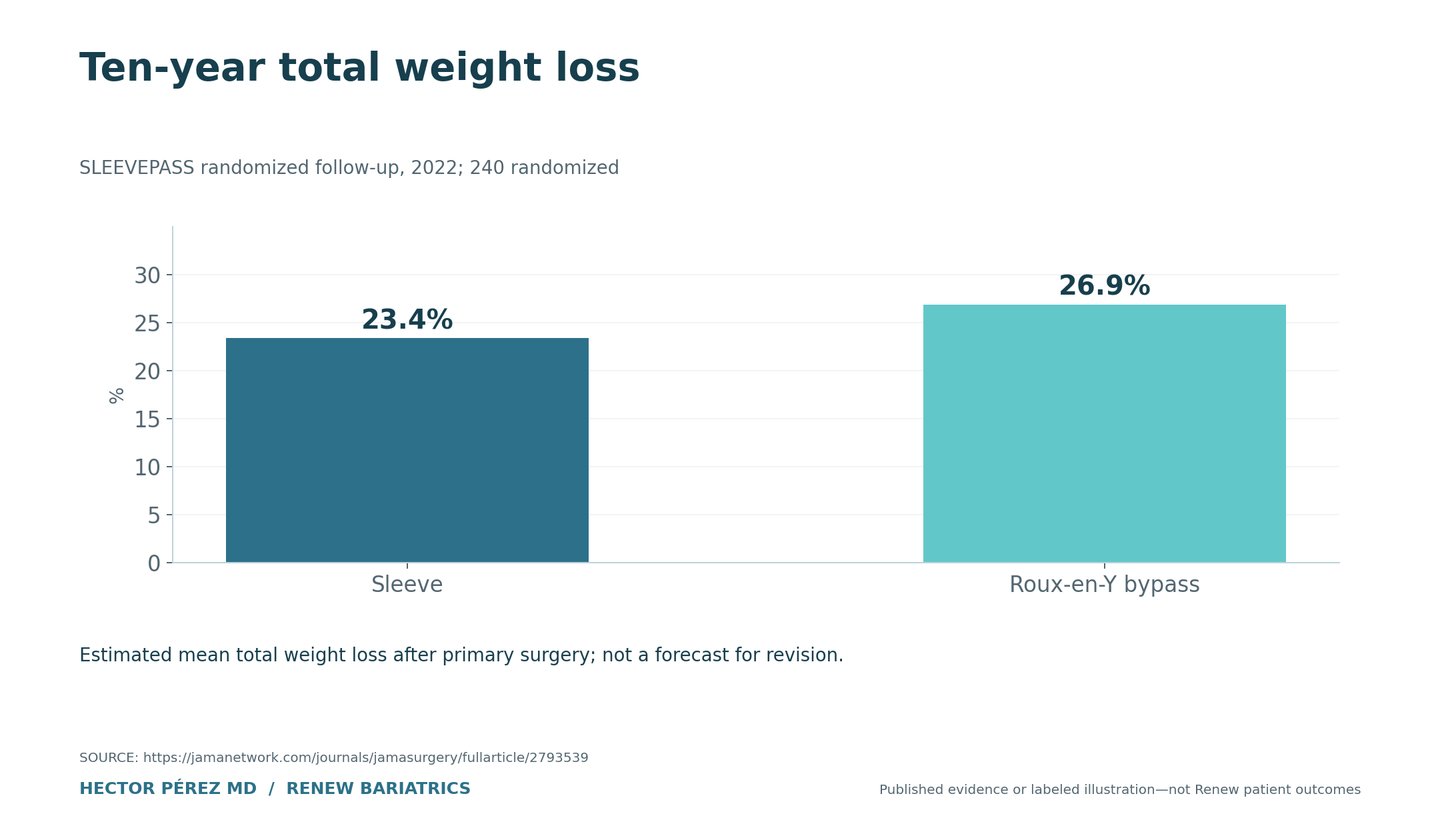
Figure data and interpretation
| Measure or group | Reported value or context |
|---|---|
| Sleeve | 23.4% |
| Roux-en-Y bypass | 26.9% |
Estimated mean total weight loss after primary surgery; not a forecast for revision.
Reflux is one part of choosing an operation
When choosing between bypass and sleeve, the team should ask about reflux symptoms, medication use, swallowing difficulties and previous endoscopy. Bypass may deserve particular consideration when reflux affects the choice, but a diagnosis and individualized assessment remain necessary.
The choice also depends on obesity-related conditions, previous operations, eating and medication needs, and the ability to sustain follow-up. A familiar procedure name or another person’s successful experience cannot resolve all of those factors. Ask the clinician to state the main reasons for the recommendation in your case.
Risks to discuss before deciding
Early surgical risks can include bleeding, leakage, infection, blood clots and anesthesia-related problems. Later concerns include ulcers, bowel obstruction or internal hernia, narrowing, dumping symptoms and nutritional deficiencies. Some complications require endoscopic treatment, another operation or hospital care.
Ask which risks are particularly relevant to your history, how your medication list affects the plan and how symptoms will be assessed after discharge. Do not stop a prescribed medicine because an online article says it can be problematic after bypass; obtain an individualized alternative or instruction from the treating clinician.
A risk discussion should also distinguish an uncomfortable symptom from a possible emergency. Severe abdominal pain, repeated vomiting with inability to drink, bleeding, chest pain or difficulty breathing needs prompt medical assessment. After returning home, severe symptoms should be evaluated locally rather than waiting to travel back.
Living with bypass is an ongoing treatment plan
Food intake progresses after surgery according to the team’s instructions. Long-term care includes adequate nutrition, supplements, activity as appropriate and regular assessment of obesity-related conditions. The ASMBS patient guide describes the continuing role of vitamins, hydration, protein and follow-up.
Before treatment, identify who will order and interpret laboratory tests near home. Keep the operation report, laboratory history and supplement instructions available. If you develop persistent vomiting, poor intake or unexplained weakness, request assessment rather than assuming that the problem is a normal consequence of weight loss.
Medication needs can change as weight and health change. Arrange appropriate follow-up with the clinicians managing diabetes, blood pressure and other conditions. Improvement in a condition should be documented rather than inferred from the scale alone.
First-time bypass versus conversion surgery
A person with a previous band or sleeve needs an assessment of existing anatomy. Published results from first-time bypass cannot simply be transferred to that situation. See band removal and conversion or the revision overview if that describes your history.
Renew currently lists primary gastric bypass and selected conversions, while surgical revision of an existing gastric bypass is not currently offered. Keeping those categories separate helps you seek the correct service.
Frequently asked questions
Is gastric bypass reversible?
It is intended as a lasting operation. Reversal can be considered in unusual circumstances, but it is a complex additional operation and should not be used as reassurance that the original decision has little consequence.
Can weight return after bypass?
Yes. If it does, medical review can assess the contributing factors and appropriate additional treatment. An existing bypass can still provide benefits even when weight recurrence requires care.
How do I begin a review with Renew?
Read Renew’s current gastric bypass information, then contact a coordinator about submitting your history for clinical review. Confirm the proposed operation, hospital, aftercare, individualized quote and travel arrangements before scheduling.
A published gastric bypass experience
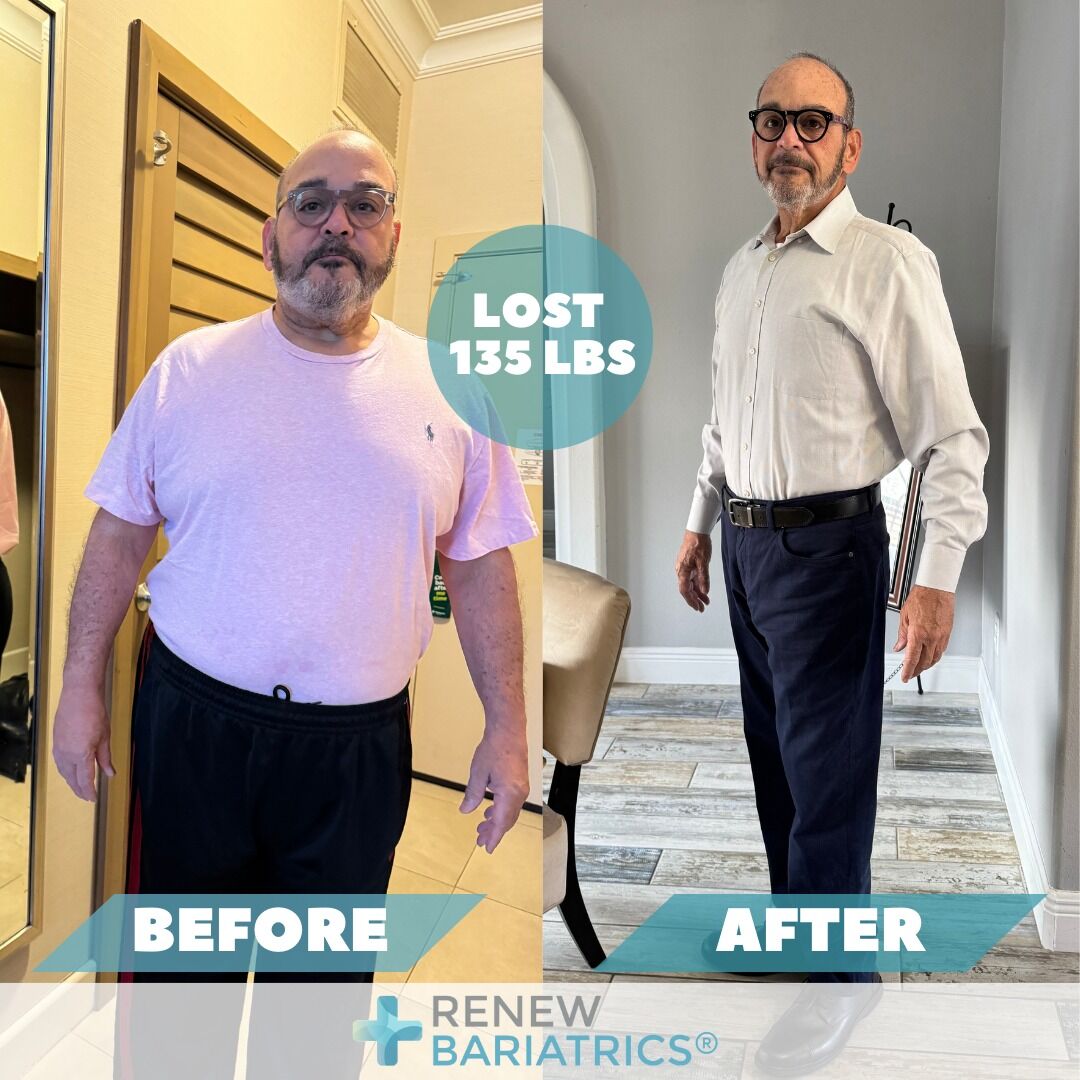
Renew attributes this result to gastric bypass with Dr. Pérez. Its card does not specify the bypass technique or revision status, so it should not be treated as a TORe or sleeve-to-bypass result. It is an individual report, not an average.
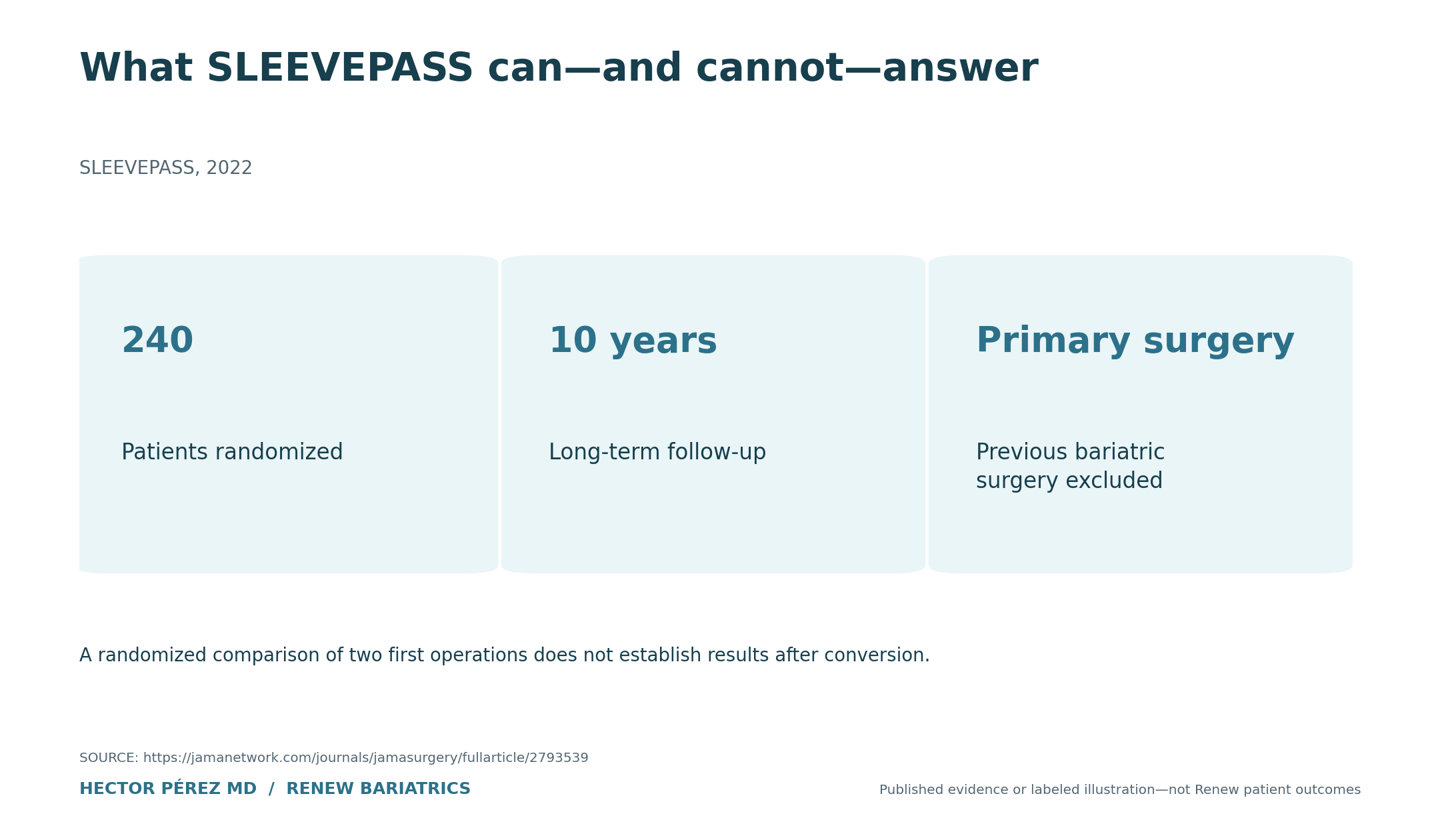
Figure data and interpretation
| Measure or group | Reported value or context |
|---|---|
| 240 | Patients randomized |
| 10 years | Long-term follow-up |
| Primary surgery | Previous bariatric surgery excluded |
A randomized comparison of two first operations does not establish results after conversion.
Understand the anatomy behind the name
Roux-en-Y gastric bypass creates a small stomach pouch and reroutes the path of food through part of the small intestine. The remaining stomach is not simply removed as it is in a sleeve operation. Ask the clinician to explain the planned arrangement in terms you can repeat back.
This anatomy helps explain why follow-up includes nutrition and why future symptoms need the operation history. It also distinguishes Roux-en-Y bypass from one-anastomosis or mini bypass. Similar names should not be used to imply identical techniques or long-term considerations.
If you already have a sleeve, a sleeve-to-bypass conversion is a revisional operation rather than the same situation as first-time bypass. The conversion guide addresses that different evidence and risk discussion.
Interpret the ten-year result as a comparison of primary operations
The SLEEVEPASS follow-up provides long-term randomized evidence comparing sleeve and Roux-en-Y bypass. Its estimated mean total weight-loss figures are useful because the procedures were studied within one trial. They should not be combined indiscriminately with results from unrelated revision cohorts.
The study also shows why one outcome is insufficient. Weight, reflux findings, associated conditions, and further operations can point to different aspects of benefit and burden. Ask which outcomes are most relevant to the reason you are considering treatment.
A long follow-up period does not remove individual uncertainty. Some patients respond differently from the average, and the research population may not match your health profile. The clinician should explain how the evidence informs the recommendation without promising a precise future weight.
Reflux can influence the choice, but still needs assessment
Roux-en-Y bypass may be considered when reflux is an important part of the clinical picture. That does not mean every burning or regurgitation symptom has the same cause or that an operation guarantees complete relief. Describe symptoms and provide prior testing and treatment history.
Ask what objective findings are available and whether further evaluation could change the plan. If a hiatal hernia or another anatomical issue is identified, ask how it affects the proposed treatment. The explanation should connect findings with the recommendation.
If symptoms persist after treatment, there should be a follow-up pathway. Continuing a medication or needing another investigation does not automatically mean no benefit occurred, but it does require clinical interpretation rather than assumptions based on the procedure name.
Discuss metabolic goals without promising a cure
If diabetes or another obesity-related condition is part of the reason for surgery, ask how improvement will be measured and who will manage medicines. A reduction in treatment needs can be meaningful, but an individual outcome cannot be guaranteed from a study average.
Keep the prescribing clinicians involved as intake and weight change. Do not independently stop diabetes or blood pressure medicines because another patient was able to do so after bypass. The plan should include monitoring and a named clinician responsible for adjustments.
Long-term follow-up should continue even if a condition improves. Ask how recurrence or a changing medication need would be handled. Surgery is part of continuing health care rather than a reason to stop medical review.
Nutrition is a lifelong practical commitment
Ask which supplements and laboratory monitoring are appropriate for the planned operation and your existing results. Bring any history of anemia, deficiencies, infusions, or difficulty tolerating products. Body size alone does not establish nutritional readiness.
The plan should identify who orders tests, who interprets them, and how abnormal results lead to treatment. A recommendation to “take vitamins” is incomplete if it does not account for the actual products, access, and follow-up. Do not improvise high doses when uncertain.
Discuss the costs and availability of continuing care near home. If the proposed regimen is difficult to sustain, raise that before surgery so the team can address the barrier. The aftercare guide provides a way to assign responsibilities.
Ask about symptoms that deserve prompt assessment
The consent and discharge discussion should explain the complications relevant to bypass and the symptoms that require urgent help. A general list of risks is less useful than a clear route to assessment when a problem occurs.
Tell future clinicians that you have a bypass when seeking care for abdominal symptoms, vomiting, bleeding, or poor intake. The altered anatomy can be relevant even years after the operation. Keep a procedure summary accessible and provide the full report when requested.
Do not assume every symptom is dumping, reflux, or an expected reaction to food. If symptoms are severe, persistent, or concerning, follow the clinical instructions and seek appropriate assessment. Online descriptions cannot establish the cause in an individual case.
Prepare medicines, diet, and anesthesia together
Provide a complete medicine list and ask for coordinated instructions around the procedure. Include GLP-1 medicines, blood thinners, supplements, nicotine, and cannabis. If your prescriber and procedure team issue different advice, ask them to reconcile it before travel.
The preoperative diet and final fasting instructions should be distinguished clearly. Ask what each stage is intended to accomplish and what to do if you cannot follow it. Report symptoms or accidental deviations accurately rather than changing the plan yourself.
If you have sleep apnea or previous anesthesia difficulties, include those details early. Ask what equipment or records the team wants you to bring. The assessment should reflect your actual health rather than a generic preparation package.
Make recovery estimates fit your daily life
Describe work tasks, lifting, commuting, childcare, and exercise. Ask which restrictions apply and when they will be reviewed. Being discharged from hospital does not automatically mean you are ready for a full workday or a long flight.
Plan for help with the tasks you will be restricted from performing. Confirm any escort or supervision requirements after anesthesia. If you live alone, identify how prescriptions, supplies, and urgent appointments will be handled.
Use the work and exercise guide as a discussion framework, then follow the instructions for your operation. A first-time bypass and a complex conversion may require different expectations.
What if weight returns after bypass?
Reassessment can consider nutrition, appetite, medicines, associated health conditions, and anatomy. An enlarged outlet may be relevant in selected patients, but a weight increase does not prove that finding. TORe addresses that specific outlet after appropriate assessment.
Surgical revision of an existing bypass includes other operations with different indications and nutritional consequences. Educational discussion does not mean every option is available through Renew. Confirm the current program scope and the exact proposed intervention.
The most useful long-term plan includes a review process for an incomplete response or later recurrence. It should provide a route back into care rather than leave you with the assumption that the original operation was your only opportunity for treatment.
Compare the complete care plan before committing
Ask for the named clinical team and facility, included evaluation, expected stay, follow-up, and arrangements for unexpected care. Review travel timing with the clinician rather than treating package duration as clearance to fly. Clarify what is included financially and what will be arranged locally.
Bring these questions to the Renew application process along with your medical history. A coordinator can organize information for clinical review; the decision about surgery requires the treating team’s assessment. ## Additional questions about the long-term decision
Does bypass remove the need for obesity medication forever?
That cannot be promised. Some patients may later benefit from medical treatment after assessment of their health and weight response. Ask how the program approaches an incomplete response or recurrence and which clinician would manage additional care. A procedure should not be framed as a requirement to avoid every future medicine. The meaningful question is what combination of treatments best supports your health over time.
What if my main goal is diabetes improvement rather than a particular weight?
State that goal clearly and ask how the evidence and recommendation apply to it. The plan should identify the measures used to assess improvement and the clinician responsible for medication decisions. A study’s average weight loss is not a substitute for discussing diabetes outcomes, duration of disease, current treatment, and individual uncertainty. Continue appropriate medical follow-up even if treatment needs decrease after surgery.
Can I use supplements recommended to a friend with a sleeve?
Do not assume the regimens are interchangeable. Your anatomy, laboratory findings, diet, and previous deficiencies may require a different plan. Bring the proposed product labels to the clinician or bariatric dietitian and ask whether they fit your instructions. If cost or tolerance is a problem, request an appropriate alternative rather than silently substituting a product that may not meet the intended need.
Which records should I keep permanently?
Keep the operative report, important complication records, current medication and supplement plan, and meaningful laboratory history. These documents help future clinicians understand the anatomy and prior treatment. Store an accessible procedure summary for urgent visits and retain the full reports for detailed review. A clear record is particularly useful when care is shared between the original surgical program and clinicians near home.
Sources and further reading
- Types of weight-loss surgery.
- SM-BOSS randomized clinical trial: long-term sleeve versus Roux-en-Y outcomes (2025).
- SleeveBypass: five-year randomized comparison of sleeve gastrectomy and Roux-en-Y gastric bypass (2024).
- Life after bariatric surgery (2021).
- Gastric bypass revision options at Renew Bariatrics (2026).
Care, in patients’ words
Patient experiences relevant to this guide
Jade H.
Gastric bypass
Describes a gentle manner and enthusiasm for patient care.
Autum C.
Gastric bypass
Highlights compassion and attention to individual health needs.
Selected patient accounts published by Renew Bariatrics. Procedures are labeled for each account; individual experiences and results vary.